Clear Space, Calmer Mind: How Decluttering Supports Our Wellbeing
The month of March in St. Augustine arrives with warm breezes, blooming color, and a
natural sense of momentum. It’s the ideal time to declutter – to clear the physical and emotional
buildup of winter and create space for a lighter, more intentional season ahead.
Clutter isn’t just a visual nuisance. Research confirms it has measurable effects on our
brains, stress levels, and emotional health. From a neurological standpoint, clutter competes for
our attention. When our environment is filled with excess items, the brain must constantly filter
information, increasing cognitive load and mental fatigue. This ongoing overstimulation can
make it harder to focus, regulate emotions, and feel calm- even when nothing else is “wrong.”
There is also strong evidence linking clutter to stress physiology. Studies have found that
people who perceive their homes as cluttered are more likely to experience elevated levels of
cortisol, the body’s primary stress hormone. Chronic cortisol elevation is associated with
anxiety, sleep disruption, inflammation, and difficulty managing emotions.
Researchers at the University of Florida Center for OCD, Anxiety, and Related Disorders
study the psychological and emotional impacts of difficulty discarding possessions. Their work
highlights how cluttered environments and attachment to excess items are closely linked with
anxiety, stress, and impaired daily functioning. While their research often focuses on clinical
hoarding, it reinforces an important takeaway for all of us: our surroundings are not
emotionally neutral. In other words, what we live among affects how we feel.
The benefits of decluttering are not about minimalism or perfection. They’re about
restoring agency. Completing small, tangible tasks – like clearing a drawer or a single surface –
can increase dopamine, a neurotransmitter associated with motivation and reward. This is why
even brief decluttering efforts often lead to improved mood, clarity, and energy.
Benefits of decluttering:
Improves focus by reducing visual distractions.
Lowers stress and supports nervous system regulation.
Can improve sleep quality.
Boosts mood and motivation through small task completion.
Increases sense of control and clarity.
Reduces feelings of overwhelm.
Makes daily routines easier and more efficient.
Decluttering works best when it’s approached gently. Research supports the effectiveness
of small, achievable actions, not all-day cleanouts. Clearing one space at a time allows the
nervous system to register success without overwhelm.
This spring, consider reframing decluttering as a wellness practice rather than a chore.
Ask yourself:
Does this item support the life I’m living now?
Does my environment help my nervous system feel settled?
What would make this space feel lighter?
And if you’re ready to let items go, donating them can transform decluttering into an act of
community service. In the St. Augustine area, gently used clothing and household items can be
donated to local organization’s thrift stores such as: Betty Griffin Center (supports survivors of
domestic abuse), Alpha-Omega, St. Vincent de Paul, and Goodwill.
Clearing physical space often creates room for clearer thinking, better sleep, and more
compassionate self-talk. Sometimes, improving our wellbeing doesn’t involve adding
something new – instead, consider letting something go.
Information contained in this article is not intended as medical advice. Please check with your
doctor before making health or wellness changes.
Bio: Diane Thompson Cortese is a Mayo Clinic-trained Wellness Coach, NASM certified
Personal Trainer, and CEO of Wildly Capable Wellness Coaching, helping women build
confidence, strength, and sustainable healthy habits, one powerful step at a time.
Contact: Website: www.wildlycapable.life Email: diane@wildlycapable.life
Run Smarter in St. Augustine: How the Jeff Galloway Run-Walk-Run Method Makes Running Accessible for Every Body
If you’ve ever thought, “I’m not a runner,” you’re not alone. Many people are drawn to running
but feel held back by fear of injury, exhaustion, or the belief that they must run nonstop for their
exercise to “count.”
That’s where the Jeff Galloway Run-Walk-Run® method comes in - a science-backed,
confidence-building approach that makes running more sustainable, enjoyable, and realistic for
real life.
Developed in the 1970s by Olympic runner and coach Jeff Galloway, the method alternates short
running intervals with planned walking breaks. Instead of pushing through fatigue, runners
manage effort intentionally, allowing the body to recover during the workout rather than after it.
The result? Less injury, more consistency, and greater enjoyment.
What Is the Run-Walk-Run Method?
The Run-Walk-Run method simply means inserting brief walk breaks into a run before you’re
exhausted. For example:
Run 1 minute / Walk 1 minute
Run 2 minutes / Walk 1 minute
Run 4 minutes / Walk 1 minute
These ratios can be adjusted for beginners, experienced runners, or anyone returning after time
off. Surprisingly, many runners discover they can go farther, and sometimes faster, using this
approach because fatigue is managed rather than ignored.
Why It’s Perfect for St. Augustine
St. Augustine’s climate makes outdoor movement inviting nearly year-round. In February,
average daytime temperatures hover around 68–70°F, with cooler mornings in the low-to-mid
50s, ideal conditions for run-walk training without extreme heat or cold.
Add ocean breezes and scenic views, and running here becomes less about suffering and more
about rhythm, movement, and presence.
Best Local Places to Run and Walk
Anastasia State Park
Shaded trails winding through dunes and maritime forest offer a softer surface, perfect for walk
breaks and joint-friendly running.
St. Augustine Beach
Flat, open shoreline stretches make it easy to time run-walk intervals using beach access points
or lifeguard stands as markers.
Vilano Bridge
For runners craving variety, the Vilano Bridge offers rare local elevation and breathtaking views
of the Intracoastal Waterway. It’s ideal for building strength, practicing effort control, and adding
gentle “hill work” into a routine.
Local Community: Ancient City Road Runners
Running doesn’t have to be a solo pursuit. Ancient City Road Runners is a welcoming local
running club open to walkers and runners of all paces and ages. Looking for a community to do
group runs with, Anastasia Island resident, Sean Doyle and his son Kilian, who was 10 at the
time, joined ACRR in 2020. “What I didn’t expect to find was a fiercely dedicated group of
runners who also acted like friends and family,” said Doyle. “They welcomed us in and took
Kilian under their wings.”
The group offers:
Weekly group runs
Training support for local races
Social connection and accountability
A strong sense of community
They also host local events, including the annual Matanzas 5000, making them a great entry
point for anyone curious about racing, especially first-timers.
Membership details and weekly run schedules are available on their website.
https://www.ancientcityroadrunners.org/
Try This: A Simple Starter Workout
Warm up: 5-minute walk
Run 2 minutes / Walk 1 minute
Repeat for 20–30 minutes
Cool down with an easy walk and stretch
Early mornings or sunset runs work best, especially as temperatures warm in the upcoming
months. Whether you’re walking your first mile, returning after a break, or training for a local
race, the Jeff Galloway Run-Walk-Run method meets you exactly where you are.
Not intended as medical advice. Please check with your doctor before making health or wellness
changes.
Bio: Diane Thompson Cortese is a Mayo Clinic-trained Wellness Coach, NASM certified
Personal Trainer, and CEO of Wildly Capable Wellness Coaching, helping women build
confidence, strength, and sustainable healthy habits, one powerful step at a time.
Contact:
Website: www.wildlycapable.life
Email: diane@wildlycapable.life
Small Steps, Big Magic: Setting Micro-Goals for the New Year
As the pier fireworks fizzle and the new year rolls in with sparkling possibility, many of
us think big, creating lofty resolutions – work out at 5 a.m. daily, lose 20 pounds, earn a
million dollars. But big goals tend to collapse like a sandcastle at high tide. When
change feels too big, we freeze. Micro-goals offer a better path: small, doable actions
that build confidence, momentum, and real transformation over time. Like walking the
shoreline in St. Augustine Beach, one step at a time eventually takes you farther than
you expect.
Why Tiny Goals Matter
Micro-goals work because they’re achievable. Small wins release dopamine, reinforcing
progress and encouraging consistency. You don’t need to overhaul your life, just make
one tiny shift today, and another tomorrow. Celebrating these small wins matters
because they prove to you that you can follow through, and that sense of success
creates momentum.
Examples of Breaking Big Goals into Micro-Goals…
Big goal: Eat healthier.
Micro-goals:
Check out the offerings of the local farmer’s markets at The Amp or pier.
Add one fruit or veggie to a meal each day.
Swap one packaged snack per week for a whole-food option.
Big goal: Exercise daily.
Micro-goals:
Walk the beach for five minutes.
Do 10 squats while waiting for your coffee to brew.
Big goal: Be calmer.
Micro-goals:
Take three deep breaths before picking up your phone in the morning.
Step outside for two minutes of fresh air.
Big goal: Build deeper relationships.
Micro-goals:
Send one thoughtful text a day.
Plan one beach walk or coffee meet-up per month (Check out the Kookaburra,
Zaba’s, Starbuck’s, or Une Autre.).
Visualize Yourself Succeeding and Celebrate When you Do
Imagine greeting the sunrise at the beach, not promising a 5-mile-run, just committing to
walk for five minutes. Tomorrow you might go a few steps farther. A week later, farther
still. Change doesn’t require force or perfection, it requires consistency.
This year, shrink your goals. Make them so small you can’t fail. Small steps lead to big,
sustainable change, wave by wave, step by step.
Bio: Diane Thompson Cortese is a Mayo Clinic-trained Wellness Coach, NASM certified
Personal Trainer, and CEO of Wildly Capable Wellness Coaching, helping women build
confidence, strength, and sustainable healthy habits, one powerful step at a time.
Contact:
Website: www.wildlycapable.life
Email: diane@wildlycapable.life
52, Feral and Fiery
It all begins with an idea.

It’s my birthday.
And the best gift I could give myself this year isn’t something I can unwrap…it’s the decision to say yes to life.
To new experiences.
To curiosity.
To everything that sets my soul in motion.
For a long time, I kept waiting for clarity, for the “right time” or perfect plan, but I’ve realized that life gets exciting the moment you stop waiting and start exploring.
This year, I decided to follow the spark. To step out of certainty and into possibility. And that choice lit a fire I didn’t even know I’d been craving.
I started my own business, Wildly Capable Wellness Coaching, and it’s become more than a dream. It’s a declaration.
It’s me saying: I want more passion, more adventure, more purpose, more life.
This season is about courage and curiosity…about trading control for creativity, and pressure for presence. I’m learning that growth isn’t about pushing harder, it’s about opening wider.
I don’t need all the answers.
I just need to keep moving toward what feels alive.
So here’s to being 52, and absolutely on fire for what’s next.
Here’s to the late starts, brave choices, wild dreams, and moments that remind you: you’re not done. You’re just getting started.
Here’s to the year I chose wonder over fear, and built something beautiful from it.
- Diane
Founder, Wildly Capable Wellness Coaching
www.wildlycapable.life
email: diane@wildlycapable.life
The Stories We Tell Ourselves
It all begins with an idea.
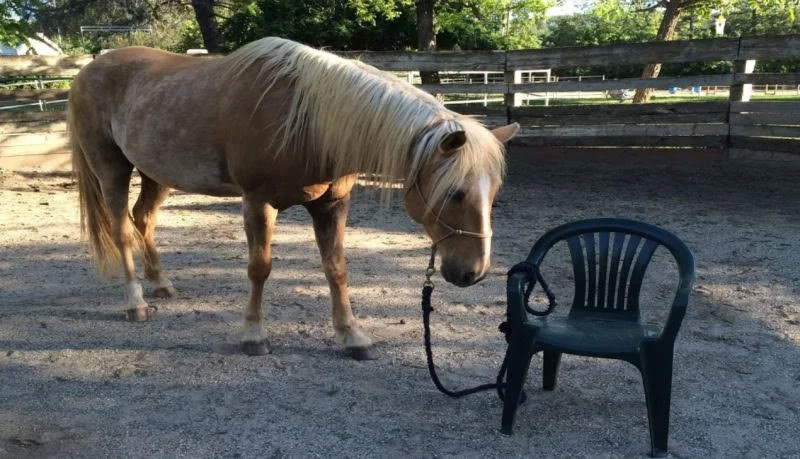
What are we believing that costs us our freedom, our happiness, and the awareness of our own true nature? - Byron Kelly
Here’s what no one tells us:
You don’t have to untie the rope.
You don’t have to drag the chair.
You don’t have to wait for permission.
You don’t have to work harder, heal perfectly, or become more worthy.
You just have to take one step.
The rope loosens.
The story cracks.
The illusion dissolves.
Your world expands.
You remember:
I was never stuck.
I was never powerless.
I was just believing a story that wasn’t true.
And once you realize that?
The chair becomes laughable.
A prop.
A symbol of your old chapter.
A relic you don’t need to carry forward.